
ISCRIVITI - Ti informeremo sulla nostra azione di cura e testimonianza
Surviving the Orange Harvest Season
Living and working conditions of foreign workers in the Gioia Tauro Plain during the citrus harvest season
San Ferdinando (RC), February 2025 – For the twelfth consecutive year, Doctors for Human Rights ( Medici per i diritti umani – MEDU) is operating in the Plain of Gioia Tauro with its mobile clinic, as part of the project “Open Campaigns: A Laboratory of Territorial Practices to Promote the Dignity of Life and Work“.
Over the past 12 years of continuous activity, we have provided medical assistance and informed thousands of people about their rights, bringing the precarious living and working conditions of migrant workers involved in citrus harvesting to the attention of institutions and public opinion.
Medical and legal assistance to foreign workers
During the recent season, from November 2024 to February 2025, our team – consisting of a doctor, a coordinator, a cultural mediator, and a legal operator – provided medical and socio-legal assistance to 371 individuals through regular outings, three times a week, at the San Ferdinando tent camp, the farmhouse in Contrada Russo in Taurianova, and Largo Bruniani in Rosarno.
The people assisted are predominantly men aged between 31 and 50 years (61%), coming from almost all West African countries, as well as from the Maghreb (Tunisia, Morocco, Mauritania), Sudan, Cameroon, and Bulgaria. The collected data confirms a situation already observed in previous years: the majority of the workers encountered (87%) hold a regular residence permit. Among them, 25% have subsidiary protection, 17% have a permit for dependent employment, and another 17% have special protection. Only 10% of the individuals interviewed were in an irregular situation regarding their residence, and 3% did not provide any information.
Labor exploitation
The majority of the migrants we encountered, around 78%, have been living in Italy for over three years and are primarily engaged in agricultural work, moving between different regions throughout the year. Working conditions, fifteen years after the “Rosarno revolt”, continue to be one of unacceptable exploitation. Despite many workers (70% of those who provided relevant information) having a short-term work contract (lasting one week, one, two, or three months), they often face salary reductions, pay below the contractual amount, reduced or even nonexistent rest days and holidays. Workers without contracts (30% of those who provided information on their contracts) are, of course, even more exposed to exploitation. All workers, regardless of their contractual status, share a state of need, which makes them vulnerable to blackmail, with extremely flexible working hours and wages that do not match what was agreed upon.
Among the people visited, some provided information on payment methods: of the 66 workers, 35% receive their wages exclusively in cash, 33% via bank transfer, and the remaining 32% through a mixed method. As for payslips, of the 55 people who provided information, 58% stated they do not receive one, and only one claimed to have reached the 102 days required for unemployment benefits through it.
Housing emergency
Even this season, the seasonal workers arriving in the Gioia Tauro Plain have not found adequate housing structures. Serious difficulties persist in finding accommodation in populated areas, forcing many workers to resort to extremely precarious solutions in suburban, illegal, and unhealthy contexts.
While it is true that in recent years, the authorities have implemented some new measures, not limited to the mere creation of emergency tent camps, these remain largely insufficient. Among these measures are the Villaggio della Solidarietà in Rosarno, which welcomed workers previously housed in the Testa dell’Acqua container camp, and the Polo Sociale in Taurianova, which provides shelter to about 96 people in 24 housing units. Meanwhile, in Rosarno, a project funded with over 3 million euros in European funds to create a housing reception and social inclusion network for migrant workers and their families—expected to build six buildings with a total of 36 apartments—has been stalled for more than 12 years. Currently, the apartments remain unused, awaiting the necessary funds for furnishing. Only after this phase is completed will the call for applications be published, which will also be open to migrants who meet the required criteria.
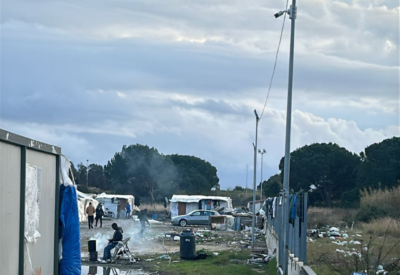
To date, the condition of San Ferdinando ministerial tent camp remains particularly concerning. It is the largest informal settlement in Calabria. Originally established as a temporary facility to house around 500 people, it has now become an expanding ghetto, with the construction of shacks and precarious structures. The tent camp is in a state of total decay, lacking essential services, including drinking water, electricity, and waste collection, and has alarming sanitary conditions. Over the years, MEDU teams have repeatedly witnessed the establishment of tent camps by authorities to manage the housing emergency for seasonal workers, which over time have been progressively abandoned, turning into increasingly degraded and insecure informal settlements.
Health and safety
The living conditions and exploitation of migrant agricultural workers have a direct impact on their health.The mobile clinic operators have encountered individuals with serious health issues and work-related injuries that required hospitalization. Cases of psychological distress are also frequent.
An emblematic example is the story of F., a young Ghanaian worker who arrived in the Plain of Gioia Tauro in November and is living in the San Ferdinando tent camp.
In January, he was reported by a concerned compatriot regarding his health condition and was visited by the MEDU clinical team for a suspected pneumonia. Without a safe place to receive treatment, he continued working until his condition worsened, requiring emergency hospitalization after a second visit. After 20 days of treatment in the hospital, he was discharged, but without a dignified housing alternative, he was forced to return to the tent camp. Faced with a lack of prospects and unbearable living conditions, he decided to leave the Plain of Gioia Tauro.
The most common health issues among seasonal workers are related to the harshness of fieldwork, the unsanitary housing conditions, exposure to agrochemicals, and difficulties in accessing healthcare.
Among the health problems encountered, musculoskeletal and digestive system diseases are the most frequent, followed by dental issues and respiratory diseases. Also significant are skin diseases, as well as cardiovascular diseases and genitourinary system disorders.
Daily commutes to work also take place under dangerous conditions, with poorly maintained roads and inadequate lighting, factors that increase the risk of accidents.
Social Tensions
The recent citrus harvest season was marked by an increase in social tensions, culminating in an episode of violence against a farmworker while cycling on the road. In response to this incident, MEDU, together with local associations, issued a joint statement on January 7 (link https://mediciperidirittiumani.org/calabria-piana-di-gioia-tauro/), calling for prompt measures in light of the worsening living conditions in the San Ferdinando tent camp and the surrounding areas.
In response to the growing tension in the area, the Prefect and the Mayor of San Ferdinando called a meeting on February 19, involving the network of local associations. During the meeting, MEDU and the other organizations present reiterated the urgency of adopting a structural approach that goes beyond the emergency logic, promoting sustainable housing policies. The good practices implemented by civil society over the years were highlighted, particularly initiatives such as the “accoglienza diffusa” in Drosi (with the support of the local Caritas) and the Dambe-So Hostel run by Mediterranean Hope, which offer alternative and sustainable models for welcoming migrant workers.
During the meeting, the authorities announced plans to build 44 chalets on a former agricultural site between San Ferdinando and Rosarno, to house 180 workers as a measure to address the issues in the tent camp. While this initiative may represent progress in terms of housing conditions, it still appears to be a partial response with potentially problematic aspects. The isolated location of these structures risks recreating the model of segregated settlements in rural areas lacking transportation and other essential services. As has happened in the past with other housing solutions, there is a real risk that this intervention will turn into a new isolated ghetto rather than a genuine path to integration. The number of planned units is also still insufficient to meet the actual housing needs during the citrus harvest season.
Proposals of Medici per i diritti umani
Doctors for Human Rights (MEDU) reiterates the need for timely and coordinated interventions to address, in a structural way, the critical issues related to the living and working conditions of foreign agricultural workers. An effective socio-housing strategy must ensure sustainable and forward-thinking solutions, integrated into the urban fabric, with accessible services, to avoid reproducing dynamics of social exclusion and to guarantee dignified accommodation and a more efficient use of economic resources. In this regard, it is a priority to strengthen experiences of decentralized housing and the redevelopment of real estate, promoting integration with local communities and genuinely inclusive territorial development.
On the healthcare front, it is urgent to ensure seasonal workers have adequate access to basic medical care, eliminating the bureaucratic obstacle of changing residence for choosing a general practitioner. To this end, MEDU proposes the establishment of temporary proximity clinics, capable of providing general medical services and some essential specialist services throughout the citrus harvest season.
Although some inspections have been carried out by the labor inspectorate in Reggio Calabria this season, revealing new cases of exploitation, the phenomenon remains widespread and deeply rooted. For this reason, a constant and widespread monitoring strategy by the labor inspectorate is considered essential to combat all forms of irregular employment and ensure health and safety at work. More generally, the adoption of structural policies and targeted investments for the revitalization of the agricultural sector in Southern Italy, and particularly in Calabria, remains crucial. This includes providing incentives to companies that promote ethical and high-quality production, fully respecting workers’ rights and environmental sustainability.
In the short term, it is urgent to intervene to guarantee more dignified living conditions in the San Ferdinando tent camp, by improving essential services: waste collection, hot water availability, regular electricity service, and the constant presence of fire department personnel.
MEDU’s activities are carried out within the framework of the project “Open Campaigns: A Laboratory of Territorial Practices to Promote Dignity of Life and Work,” funded by the Fondazione con il Sud.